

Applications Notes
AJA’s In-House Applications Research Center

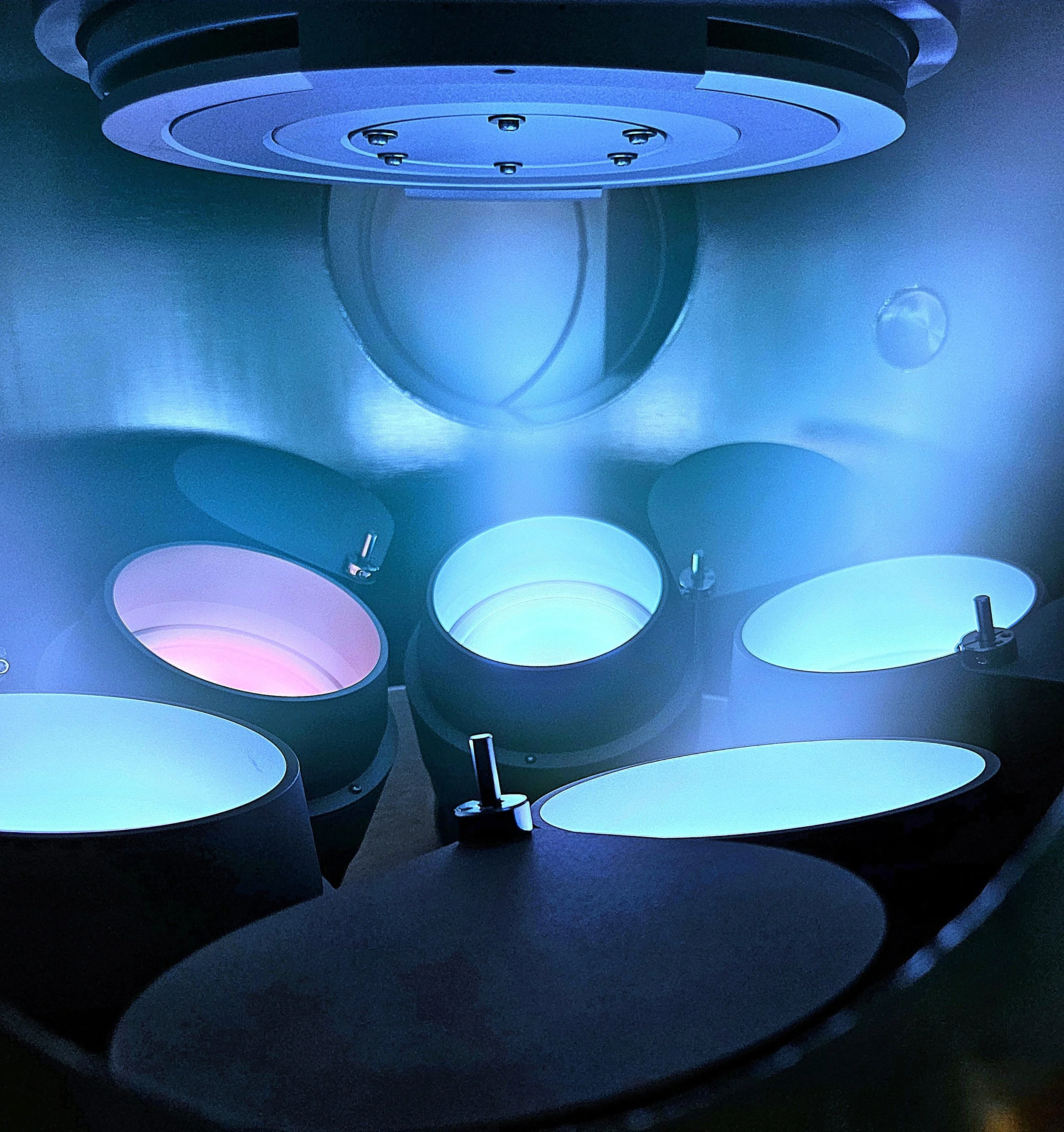
Overview
AJA International actively develops applications in thin film deposition for a variety of materials. Based on this work, we provide here Application Notes with short overviews for growing films serving practical purposes in a variety of areas. This makes available tested recipes for quickly getting started in use of our tools for specific needs. We will post an introduction to each here and will be continually growing this resource. Please reach out to us to request a copy of any note you are interested in!
Refractory Metal Film Deposition: Resistivity
Introduction
The refractory metals, defined by their high melting points, are useful for their resistance to heat, wear, and corrosion. They maintain their performance at high temperatures. If one wants to combine these properties with low electrical resistivity and low cost, Tungsten (W), Molybdenum (Mo), and Tantalum (Ta) are top choices. Book values for bulk resistivity are shown in the table below. However, achieving resistivity close to bulk values can be difficult. The goal of this application note is to give some reference information and process recipes for depositing these materials.

Bulk properties of three refractory metals
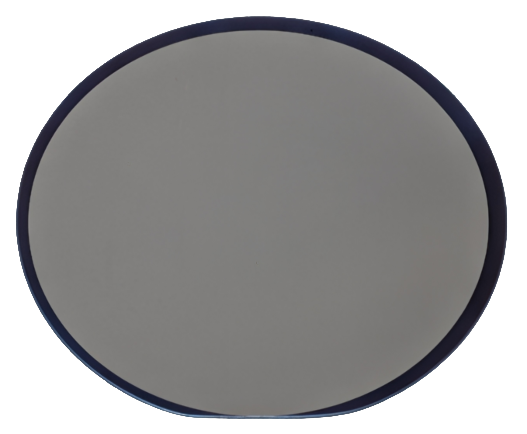
Tungsten thin film on an oxide-coated silicon wafer
Reactive Sputtering Processes for Aluminum Nitride
Introduction
Aluminum nitride has a combination of useful properties that recommend it for a variety of applications.
It is a strong piezoelectric material. This makes is useful in filters (like SAW devices) and generally in sensors and transducers.
It is employed in MEMS devices due to the above functionality.
It is an excellent thermal conductor – better than many metals. At the same time, it is an electrical insulator. This makes it ideal for heat dissipation in electronic devices.
As it is electrically non-conducting, it is useful as an insulation layer in devices, in capacitors, as a passivation coating, or buffer layer.
It is chemically stable and hard, serving as a protective layer such as corrosion resistant coatings.
This material is still emerging in many application areas, so processes for thin film deposition are called for. Sputtering is often utilized for this task. Aluminum nitride has a notoriously low sputtering yield, making deposition from ceramic targets impractically slow. Bulk aluminum nitride is also expensive, so fabricating targets for such a process adds to cost.
Reactive sputtering from an aluminum target in a nitrogen-containing sputter gas is a faster process, using more affordable starting material (10x cheaper). We share here recipes we’ve developed using three different reactive processes: RF, DC, and HiPIMS sputtering. The goal is to provide a starting point for process recipes that anyone working in PVD can use.
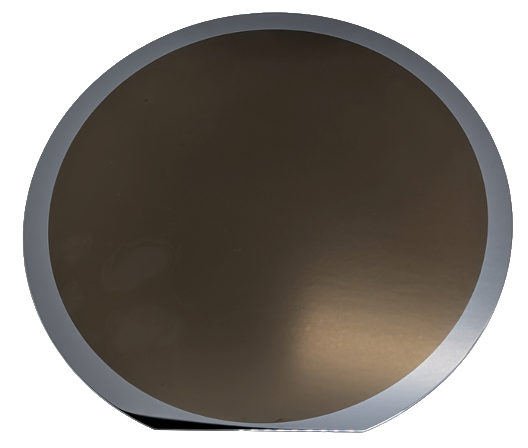
43 nm thick aluminum nitride film on a 150 mm silicon wafer
Combinatorial Materials Screening
Introduction
Alloys are traditionally made from one or two principal elements, with additional elements in dilute concentrations, chosen to make the material suitable for a given application. Complex Concentrated Alloys or High Entropy Alloys have a greater number of principal elements (3-5 or more). If we use a definition of a principal element as having a concentration between 5 – 75 at% for setting up a composition space to explore experimentally, the number of possible alloys grows quickly as more elements are added. Creating a family of test alloys using composition steps of 5% yields 153 possible combinations for three elements and almost 4,000 for five elements. These are too numerous to explore one at a time in any practical way.
Co-deposition by magnetron sputtering is a simple and flexible approach to make alloys with arbitrary concentrations. Gradient combinatorial sputtering provides samples that can be used to screen large numbers of possible compositions quickly. The goal of this application note is to convey a method we’ve used to make such combinatorial thin films.
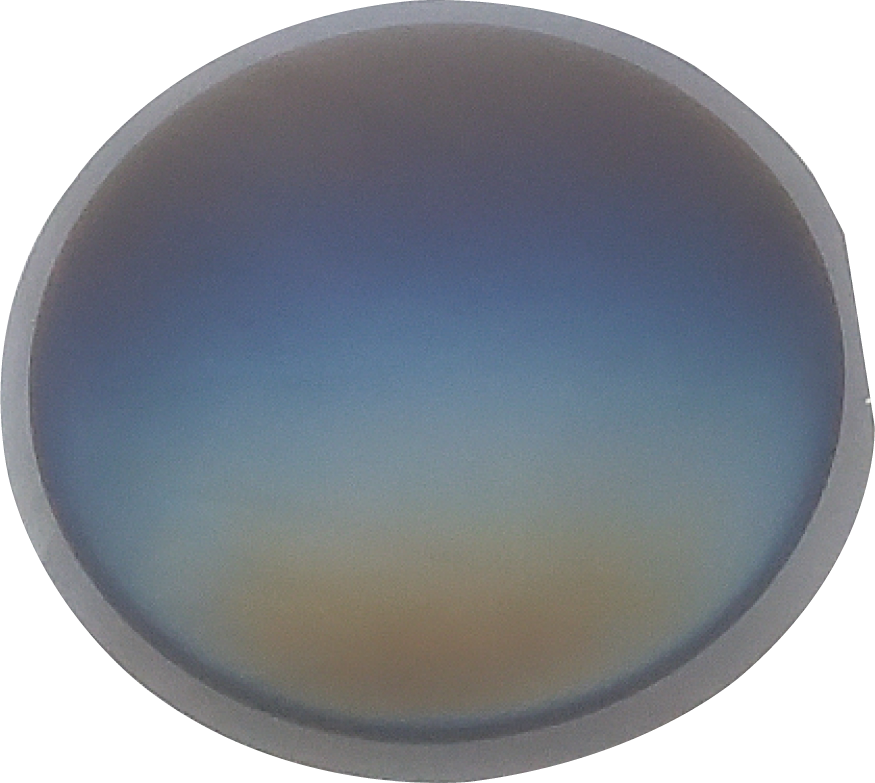
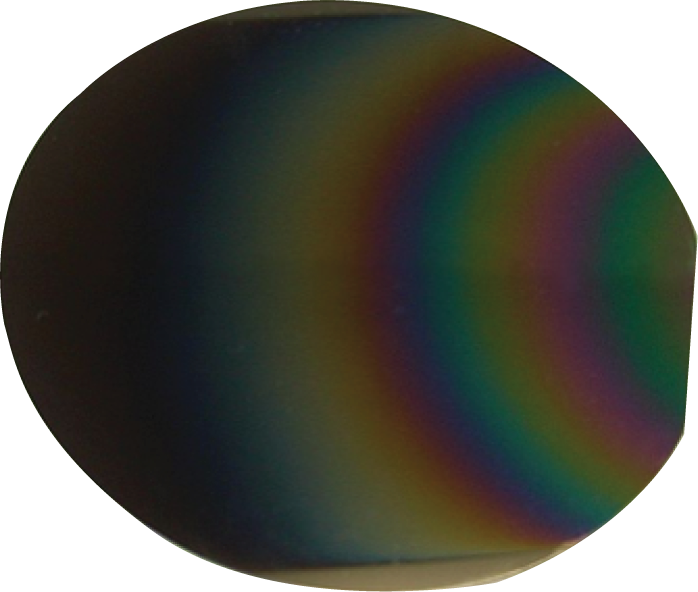
Gradient Films
Magnetron Sputter Deposition of Titanium Nitride
Introduction
Titanium nitride (TiN) is a multi-functional coating material.
It is a ceramic nitride, making it a hard coating material with low coefficient of friction for tribological applications
It is a conductive material as well, allowing it to be used for electrical contact in electronics applications, including semiconductors
As a superconducting material, if finds use in sensors such as SQUID
Its interesting optical properties recommend it as a candidate for plasmonic devices
Its lustrous gold color has made it widely used for decorative coatings.
All these properties can be imparted to surfaces as coating through thin film deposition. Magnetron sputtering is a simple and convenient method for applying this material.
However, many materials and devices cannot be subjected to the high temperatures often used in TiN deposition recipes. This Application Note gives specific guidance for the deposition of TiN with the substrate at room temperature.
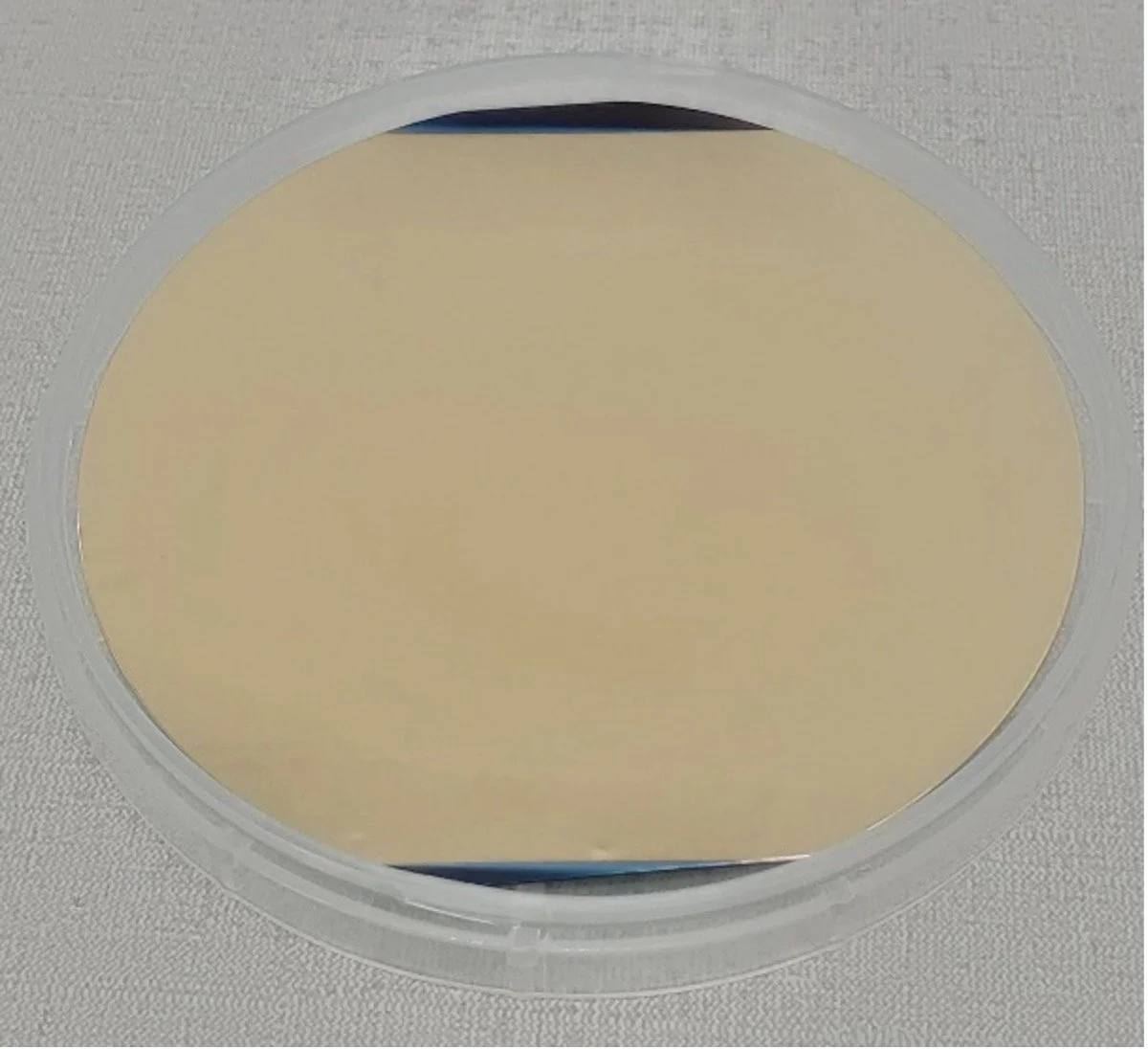
Titanium nitride thin film on an oxide-coated silicon wafer

AJA International’s applications team is regularly updating our library with comprehensive process notations. Check in here weekly for new and exciting information.
To receive copies of any of these applications notes, contact our sales team today.